

How to Find and Buy the Perfect Domain Name
Choosing a domain name feels like picking a name for your first business storefront once you paint it on the window, changing it later is a massive pain.
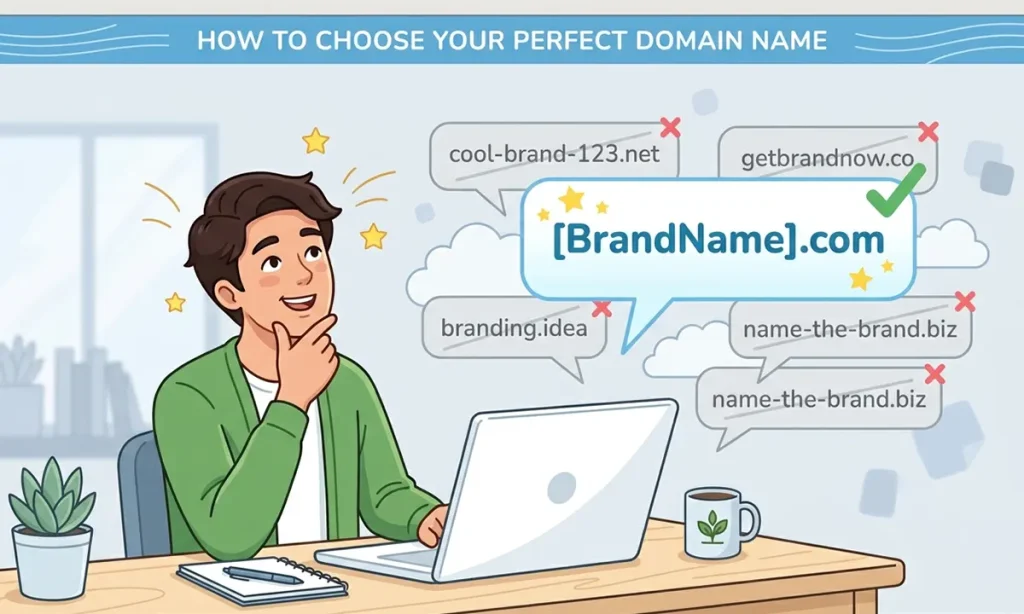
While most people rush into a registrar, type in a random idea, and buy the first thing they see, experienced webmasters know there’s a process to it. A bad domain can tank your brand trust, hurt your click-through rates, and lock you into ridiculous renewal fees.
Here is a practical, battle-tested framework for picking, checking, and buying a domain name that actually scales with your business.
5 Rules for Choosing a Domain You Won’t Regret
Before pulling out your credit card, run your domain idea through this quick reality check:
- Stick to .com whenever you can: It’s not just habit it’s instinct. When people guess your website address, 90% of the time they type
.com. Unless you are an AI startup (.ai) or a tech platform (.io),.comremains the gold standard for immediate trust. - The Radio Test: Imagine saying your domain name out loud on a podcast or over a bad phone connection. Would the other person spell it right on the first try? If you have to say That’s brand with a K, not a C or There’s a hyphen in the middle, drop the idea immediately.
- Keep it between 6 to 14 characters: Short names are easier to type on mobile screens and far less prone to typos.
- Avoid hyphens, numbers, and double letters: Names like
best-shoes4u.comorpressstart.comcreate unnecessary friction and lead to leaked traffic. - Brandability beats keyword stuffing: Years ago, people bought domains like
best-cheap-running-shoes-online.com. Modern search engines ignore keyword-stuffed domains and prioritize real brands. Pick something short and memorable instead.
Smart Brainstorming Tools
Typing your domain ideas straight into standard registrars is usually a mistake they often push overpriced “premium” domains or odd extensions you don’t need. Instead, use these modern tools to generate ideas fast:
Legal Safety & Domain History
- LeanDomainSearch & Namecheap Instant: Great for instantly checking thousands of available
.comcombinations paired with your core keyword. - Namelix & DomainWheel: AI-driven generators that help spark unique, abstract brand names when your main idea is already taken.
- Namechk: A quick lookup tool to check if matching handles are open on X (Twitter), Instagram, YouTube, and LinkedIn at the same time.
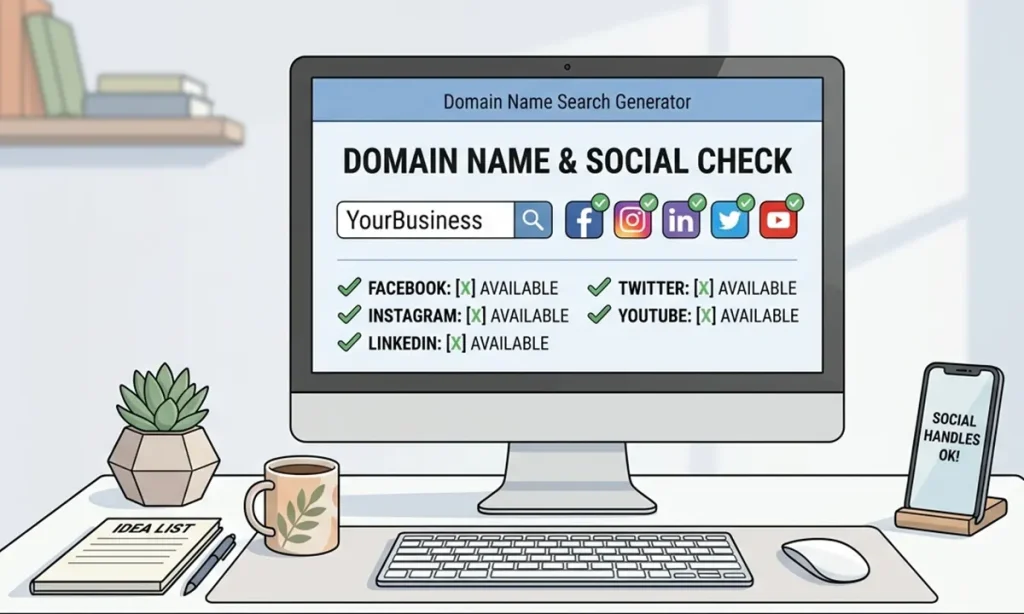
Just because a domain shows as Available doesn’t mean it’s safe to buy. Taking two extra minutes to check its history can save you from a legal headache down the road.
Check Trademarks First
Head over to the USPTO (or your local country’s trademark registry) and search your proposed name. Registering a domain containing trademarked names (like iPhoneFixer.com or NikeDeals.com) can lead to instant trademark disputes and domain loss without a refund.
Inspect the Domain’s Past
If you are buying a domain that was previously owned by someone else, check its archive on Archive.org (Wayback Machine). Also, run it through SEO tools like Ahrefs or Moz to ensure it wasn’t previously used for link spam, adult content, or malicious redirects. A bad domain history will make ranking on search engines almost impossible.
Is Getting a Free Domain Really Worth It?
Many web hosting providers try to entice you with offers like “Free Domain Name for the First Year!” when you buy a hosting plan. But is this actually a good deal, or a subtle trap?
The Reality Behind Free Domains
- The Catch: The domain is usually only free for the first 12 months. After that, the web host often charges a inflated renewal fee (sometimes $20–$30/year) compared to standard domain registrars.
- Lock-in Risk: Some hosts make it notoriously difficult to transfer your free domain out to another provider later if you decide to cancel their hosting service.
How to Take Advantage of Free Domain Offers Safely:
If you want to save money upfront and grab a free domain offer, make sure to follow these rules:
- Verify the 2nd-Year Renewal Cost: Read the fine print before signing up. Make sure the second-year renewal rate for the domain isn’t double the market price.
- Ensure Full Domain Ownership: Confirm that the domain is registered under your name and contact details, not under the hosting company’s proxy. You must be listed as the primary registrant.
- Check the Privacy Terms: Make sure the “free” offer includes Free Lifetime WHOIS Privacy. Some hosts give you a free domain but charge extra to keep your private address off spam databases.
- Mark the 60-Day Lock Period: According to ICANN rules, you cannot transfer a newly registered domain for 60 days. Once the 60 days pass, you are free to transfer the domain to a cheaper registrar (like Porkbun or Cloudflare) before the expensive second-year renewal hits.
Popular Top-Level Domains (TLDs) at a Glance
If the .com version of your dream name is taken, here is how other popular extensions stack up:
| Extension | Best For | Industry Fit |
| .com | Universal trust & global authority | All businesses / First choice |
| .co / .net | Clean fallback if .com is unavailable | Tech, agencies, and services |
| .io / .ai | Modern tech standard | SaaS, AI tools, and startups |
| .org | High credibility and community focus | Non-profits, open-source projects |
ccTLD (.co.uk, .ca, etc.) | Hyper-local targeting | Region-specific local businesses |
Local SEO Tip: Running a local service business (like a plumbing company in the UK or a law firm in Canada)? A country-code TLD (ccTLD) often gives a solid local ranking boost in country-specific search results.
Choosing a Transparent Registrar
Not all domain registrars are built equal. Some use hidden charges and aggressive upsells to bump up your total price at checkout.
Top Transparent Registrars We Recommend:
- Porkbun: Known for transparent pricing, zero aggressive upsells, and free WHOIS privacy by default.
- Namecheap: Easy-to-use interface, solid 24/7 support, and reasonable long-term rates.
- Cloudflare Registrar: Sells domains at direct ICANN wholesale cost with zero markup ideal if you already use Cloudflare.
- NameSilo: Simple, flat-rate pricing with no hidden fees, making it great for managing multiple domains.
2 Sneaky Checkout Traps to Avoid:
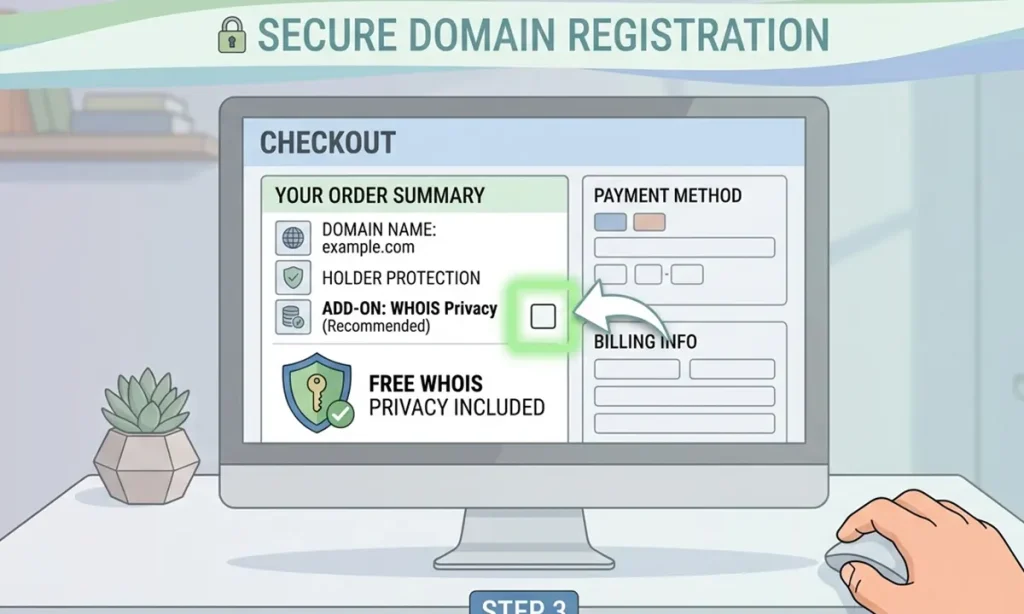
- Pre-Checked Add-Ons: Legacy registrars often auto-check web hosting trials, email suites, or security tools into your cart. Manually uncheck anything you didn’t ask for.
- Paying for WHOIS Privacy: Never pay extra to shield your contact details from public databases. Modern, honest registrars provide lifetime WHOIS privacy completely free.
FAQ
Does having keywords in my domain name help with Google rankings?
It can provide a tiny relevance signal, but a memorable, brandable domain wins in the long run. Unique brand names get higher click-through rates (CTR) and earn natural backlinks much easier than keyword-heavy addresses.
What should I do if my exact .com domain is taken?
First, try adding a natural prefix or suffix (like Get[Brand].com, Try[Brand].com, or [Brand]App.com). Alternatively, consider a modern industry extension like .co or .io. If it’s crucial to your brand and you have the budget, you can also attempt a private offer via a domain broker.
Should I turn on auto-renewal for my domain?
Yes, absolutely. Forgetting to renew your primary domain can lead to website downtime, brand disruption, or worse domain squatters instantly purchasing your domain the moment it expires.